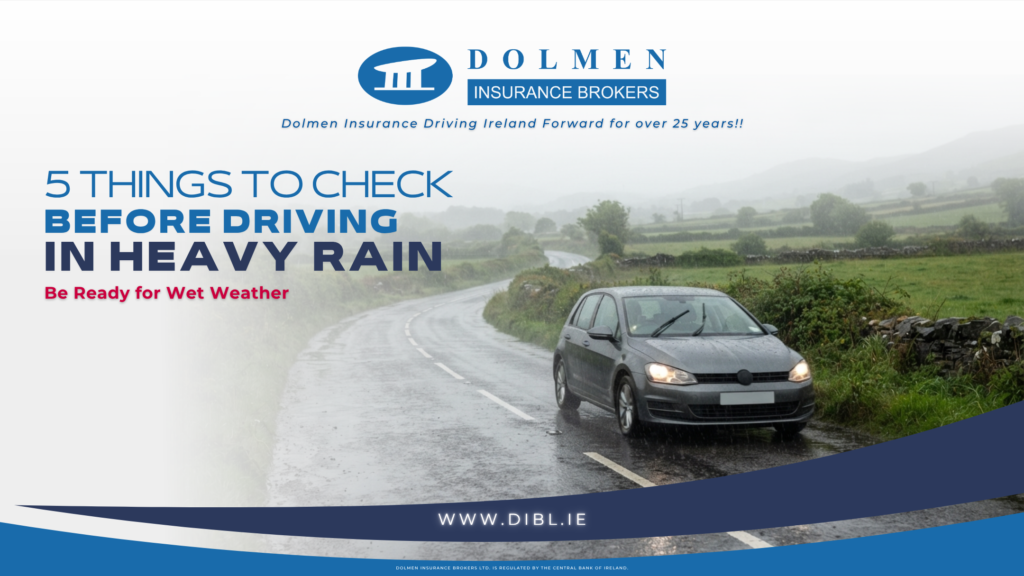
Heavy rain can make even familiar journeys more difficult. Reduced visibility, standing water and longer stopping distances can all make driving more challenging, particularly after periods of drier summer weather.
As we move into the wetter months in Ireland, taking a few minutes to check your car before setting off can help make journeys safer.
Here are five things worth checking before driving in heavy rain.
1. Check Your Tyres
Your tyres are particularly important when driving on wet roads because they are responsible for maintaining contact between your vehicle and the road.
Before setting off, check that your tyres are properly inflated and appear to be in good condition. You should also check the tread depth.
In Ireland, the minimum legal tyre tread depth for most cars is 1.6mm. However, tyre condition matters beyond simply meeting the legal minimum.
Worn, damaged or incorrectly inflated tyres can reduce your vehicle’s ability to maintain grip, particularly when there is water on the road. The Road Safety Authority (RSA) also identifies poor tyre condition as a factor that can increase the risk of aquaplaning.
If you are unsure about the condition of your tyres, consider having them inspected by a qualified professional.
2. Make Sure Your Wipers and Lights Are Working
Heavy rain can dramatically reduce how far you can see ahead.
Check your windscreen wipers for signs of wear such as streaking, juddering or areas of the windscreen they are failing to clear properly. Your windscreen washer fluid should also be topped up.
Lights are equally important.
The RSA advises motorists to use dipped headlights in poor visibility, helping you to see the road while also making your vehicle more visible to other road users.
Remember to check your headlights, brake lights and indicators regularly rather than waiting until visibility becomes poor.
3. Leave More Space Between You and the Vehicle Ahead
One of the most important adjustments you can make in wet weather doesn’t involve the car at all — it involves how you drive it.
Vehicles take longer to stop on wet roads.
The RSA advises drivers to slow down and allow a greater braking distance between themselves and the vehicle ahead during wet conditions. Particular care should also be taken around larger vehicles, which can create spray and further reduce visibility.
Avoid sudden braking or sharp movements where possible and give yourself more time to react to changing traffic conditions.
A little extra space can make a significant difference.
4. Know What to Do If Your Car Aquaplanes
Aquaplaning occurs when a layer of water builds between your tyres and the road, causing the tyres to lose contact with the road surface.
It can cause steering to feel unusually light and reduce your ability to control the vehicle.
If you believe your vehicle is aquaplaning, stay calm, keep the wheels straight and ease off the accelerator rather than braking suddenly. As the vehicle slows, the tyres should begin to regain contact with the road.
Reducing your speed in wet conditions and keeping your tyres properly maintained can also reduce the risk of aquaplaning.
5. Don’t Take Chances With Flooded Roads
A flooded road can be much deeper than it appears.
Water can also hide damaged road surfaces, debris and other hazards that aren’t visible from inside the vehicle.
If the road ahead is flooded, the RSA advises drivers to choose another route rather than attempting to drive through it. Drivers should also obey any road-closure signs put in place by local authorities or An Garda Síochána.
Adding a few minutes to your journey is far better than risking your vehicle — or your safety — by entering floodwater.
Quick Wet Weather Driving Checklist
Before heading out in heavy rain, remember to:
- Check your tyres and tyre pressure
- Make sure your wipers, lights and demister are working
- Reduce your speed and increase your following distance
- Know how to respond to aquaplaning
- Avoid driving through flooded roads
A few simple checks can make wet-weather journeys safer and help keep your vehicle in good condition.
Staying Prepared on the Road
Irish weather can change quickly, and driving conditions can change with it.
Keeping your vehicle maintained and adjusting how you drive to the conditions can help reduce unnecessary risks when the rain arrives.
At Dolmen Insurance Brokers, we believe that prevention is just as important as protection. Alongside taking steps to stay safe on the road, it’s worth making sure you understand the cover provided by your car insurance policy and who to contact if you ever need assistance.
Disclaimer:
The information provided in this blog is for general guidance and informational purposes only. While every effort has been made to ensure accuracy at the time of publication, Dolmen Insurance Brokers Ltd accepts no responsibility for any errors, omissions or changes in legislation or official guidance. This blog does not constitute legal, financial, road-safety or insurance advice. Drivers should follow current guidance from the Road Safety Authority and other relevant authorities. Insurance policies and cover vary. Dolmen Insurance Brokers Ltd is regulated by the Central Bank of Ireland.