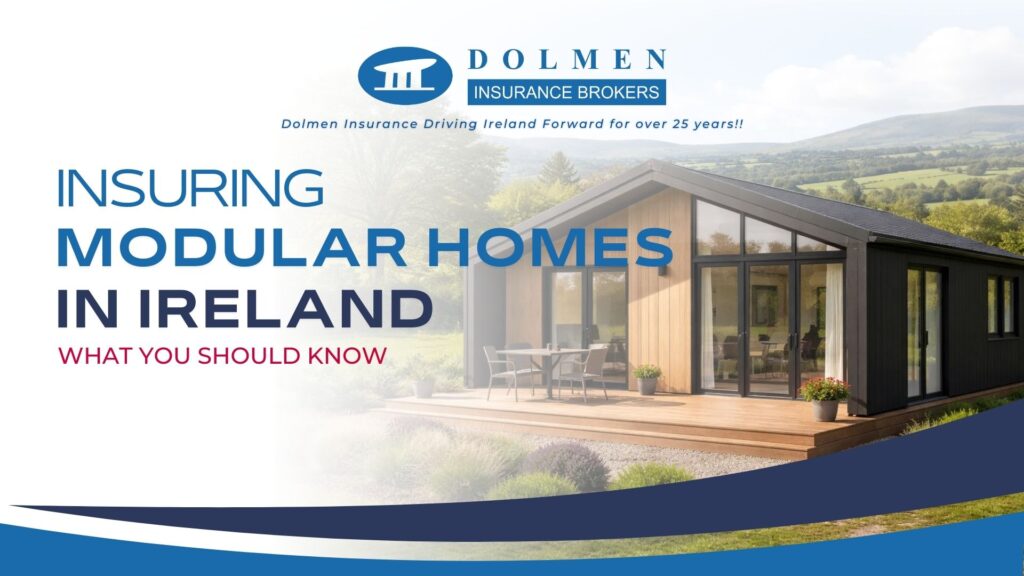
Modular homes are becoming increasingly popular across Ireland, offering a modern, efficient alternative to traditional construction. With rising build costs, planning challenges and housing shortages, many homeowners are turning to modular, prefabricated and timber homes as a practical solution.
While modular homes offer many benefits, they also raise important insurance considerations that are often overlooked until cover is needed. Understanding how modular homes are viewed by insurers can help homeowners avoid costly mistakes.
This guide explains what modular homes are, why they are growing in popularity, and what you need to know to insure them correctly in Ireland.
What Is a Modular Home?
A modular home is a property that is constructed in sections, or modules, in a factory setting before being transported to site and assembled on permanent foundations.
In Ireland, the term modular home is often used to describe a wide range of property types, including prefabricated homes, timber frame houses, Scandinavian-style homes, log homes, chalet-style properties and panelised construction systems.
Once completed, many modular homes are visually indistinguishable from traditional houses. However, from an insurance perspective, the method of construction is extremely important and must be disclosed accurately.
Why Are Modular Homes Becoming So Popular in Ireland?
There are several reasons why modular homes are growing in popularity throughout Ireland.
They typically offer faster build times than traditional construction, allowing homeowners to move in sooner. Costs are often more predictable, with fewer delays and unexpected overruns. Many modular homes are highly energy efficient, making them attractive to buyers focused on sustainability and long-term savings.
For rural and one-off housing, modular homes can provide a practical solution where traditional builds may be slow, complex or expensive.
Are Modular Homes Considered Non-Standard Construction?
From an insurance point of view, many modular homes are classified as non-standard construction.
This is particularly true for timber homes, log homes, prefabricated properties and Scandinavian-style houses. Even when these homes fully comply with Irish building regulations, some insurers still apply non-standard construction criteria.
This does not mean that modular homes are difficult to insure. It does, however, mean that they are often unsuitable for standard home insurance policies.
Why Insurance for Modular Homes Is Different
Many standard home insurance policies in Ireland include restrictions or exclusions for certain construction types. Some policies limit cover for timber structures, while others exclude log homes or factory-built properties altogether.
In some cases, cover may be offered but with reduced limits, higher excesses or strict conditions. These issues often only become apparent at claim stage, which can lead to disputes or underinsurance.
If you own or are building this type of property, it is essential to arrange specialist Modular Home Insurance in Ireland with a broker who understands non-standard construction.
What Should Modular Home Insurance Cover?
A properly structured modular home insurance policy should take into account the true rebuild cost of the property, not just its market value. It should also reflect the specific construction materials and specialist trades required to rebuild the home.
Cover should typically include protection against fire, storm damage, flood, escape of water, theft and vandalism. Optional accidental damage cover may also be appropriate depending on the property and how it is used.
It is particularly important that insurers fully understand the construction method, as this can significantly affect how a claim is handled.
Are Garden Rooms and Shomeras Covered?
Garden rooms and Shomeras have become increasingly common across Ireland, particularly as home offices and additional living spaces.
Many of these structures are timber or modular in construction and may not be automatically included under a standard home insurance policy. In some cases, they may be excluded entirely or covered only up to a very low limit.
These structures should always be declared and insured correctly to avoid gaps in cover.
Common Insurance Mistakes Made by Modular Home Owners
One of the most common mistakes is assuming that standard home insurance will be sufficient. Other frequent issues include failing to disclose the construction type, underestimating rebuild costs, or choosing the cheapest policy rather than the most appropriate one.
Modular homes often require specialist cover, and overlooking this can result in serious problems if a claim arises.
Why Specialist Advice Matters
Modular and non-standard homes represent a modern and innovative approach to housing in Ireland. However, they must be insured correctly to ensure they are properly protected.
A policy that appears suitable on paper may not respond as expected if the construction type has not been fully understood or disclosed. Working with an experienced broker who understands modular and non-standard homes can make all the difference.
If you would like guidance or a quotation, speaking with a specialist about Modular Home Insurance in Ireland can help ensure your home is insured correctly from the outset.
Disclaimer
This article provides general information only and does not constitute financial or insurance advice. Rebuild costs and policy suitability vary depending on individual circumstances. Homeowners should seek professional advice tailored to their specific property and needs before making insurance decisions.