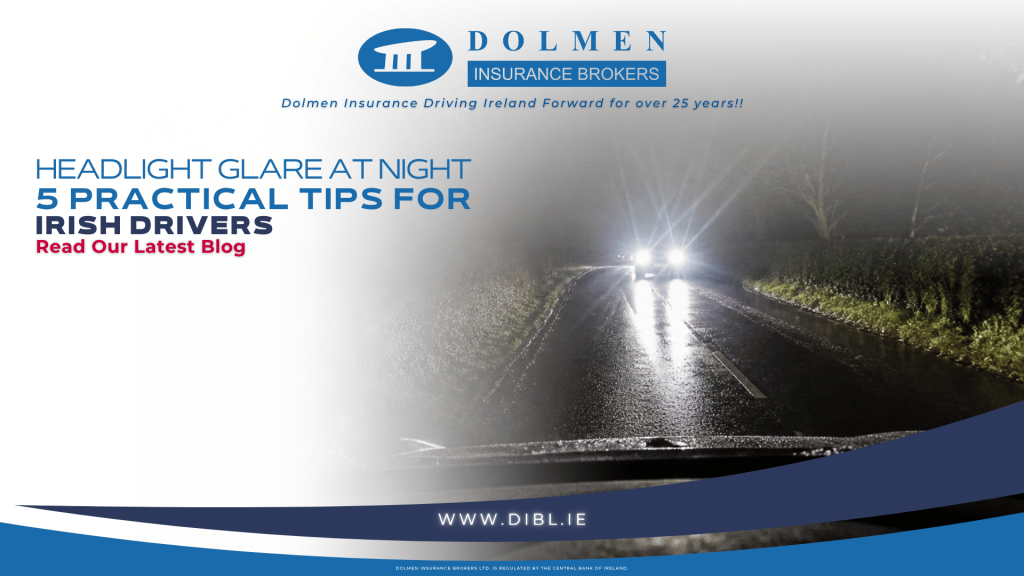
The clocks have gone back, and the drive home is suddenly a night-time journey. If bright headlights are making familiar roads harder to see, a few checks before setting off are worth your time.
Headlight glare is the dazzling effect of another vehicle’s lights that interferes with your view of the road. You cannot change the headlights coming towards you, but you can improve your own visibility and know how to respond.
How can you reduce headlight glare when driving at night?
Keep your windscreen clean inside and out, clear condensation, and use your rear-view mirror’s anti-dazzle setting where fitted. If approaching headlights dazzle you, avoid looking directly at them, reduce your speed and stop safely if necessary.
Here are five practical steps for driving after dark in Ireland.
1. Clean the inside of your windscreen as well as the outside
The inside of a windscreen is easy to overlook when cleaning the car. Before your next evening journey, check both sides of the glass for smears and greasy marks.
Keeping the windscreen clean can help reduce the effect of glare. Clean your mirrors too, and make sure they are correctly positioned before moving off.
This is a useful place to start because it is something you can check while the car is parked. If bright lights are already making the journey uncomfortable, you do not want dirty glass making the view more difficult.
2. Use your rear-view mirror’s anti-dazzle setting
Headlights behind you can be distracting when they reflect in your interior mirror. A night or anti-dazzle setting, where fitted, helps reduce that reflected brightness.
On many manual mirrors, a small lever beneath the mirror switches between day and night settings. Other vehicles have automatic dimming. Check your vehicle handbook and familiarise yourself with the controls before driving.
The UK’s Department for Transport includes mirror dimming among its practical tips for dealing with headlight glare.
Remember that this setting helps with lights from behind. It does not change your view of headlights approaching through the windscreen.
3. Clear condensation and check your wipers
Before driving at night, give your demister time to clear the windows properly. Learn which settings your car uses to keep the windscreen clear, rather than waiting until it mists up during a journey.
Check your wipers and washers too:
Make sure the blades clear the glass without leaving smears.
Keep the washer reservoir topped up with suitable screenwash.
Have worn or ineffective blades replaced.
Darkness and wet weather often arrive together during an Irish winter. For more preparation tips, read our guide to five things to check before driving in heavy rain.
4. Slow down if oncoming headlights dazzle you
If an approaching vehicle’s headlights affect your vision, avoid staring directly into the beams. Look briefly towards the left-hand edge of your side of the road to help maintain your position, while staying alert to pedestrians, cyclists and other hazards.
Reduce your speed smoothly. If you cannot see sufficiently to continue safely, stop safely if necessary.
The Road Safety Authority’s Rules of the Road includes guidance on being dazzled by headlights and using a mirror’s night setting.
Choose a speed that lets you stop within the distance you can see to be clear. Knowing the road well does not tell you what might be ahead tonight.
5. Check that your headlights are not dazzling other drivers
Being on the receiving end of headlight glare is a good reminder to check your own lights.
Dip your headlights when meeting oncoming traffic or following another vehicle. If your car has automatic high beams, know how to override them and be ready to take control when needed.
Keep your lights clean and working properly. If you suspect a problem with headlight alignment, ask a qualified professional to check it.
These checks help you play your part in making night-time journeys more comfortable for other road users.
Frequently asked questions about headlight glare.
Does an anti-dazzle mirror help with oncoming headlights?
No. The interior mirror’s night setting reduces reflected light from vehicles behind you. It does not reduce the brightness of approaching headlights seen through your windscreen.
Are daytime running lights enough for driving at night?
No. Daytime running lights are intended for daylight visibility, not illuminating the road after dark. The RSA advises drivers to switch on their headlights before darkness; rear lights may not be illuminated when only daytime running lights are in use.
Should you wear sunglasses to reduce headlight glare?
No. Sunglasses and tinted lenses reduce the light available to you and should not be worn for night driving. Wear any prescription glasses required for driving and keep them clean.
A little preparation for the journeys ahead
Before your next evening drive, take a few minutes to check your windscreen, mirrors, wipers and lights. Those small jobs are easier to deal with at home than halfway through the journey.
At Dolmen Insurance Brokers, we want to share useful advice that helps our customers feel more prepared for everyday life, including the journeys they make each day.
If you have a question about your car insurance, our team is here to help. Visit our car insurance page or call 01 802 2300 to speak with us.
Disclaimer
This article is provided for general information purposes only and should not be regarded as financial, legal or insurance advice. Every business has different circumstances and insurance requirements. Before making decisions about your commercial insurance, you should seek professional advice based on your individual business needs. Dolmen Insurance is regulated by the Central Bank of Ireland.