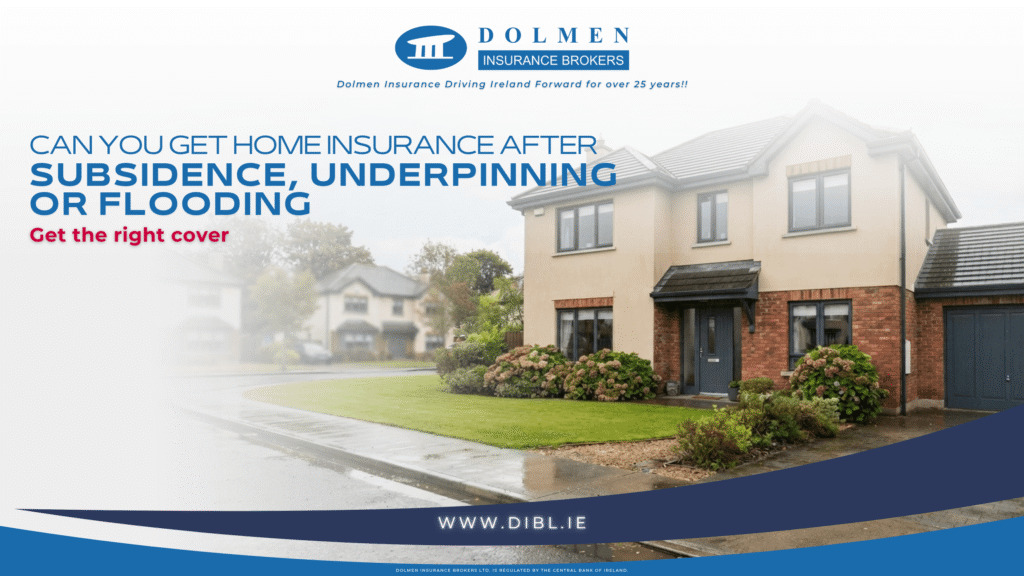
Finding home insurance isn’t always straightforward when a property has a history of subsidence, has previously been underpinned or is located in an area considered at risk of flooding.
These factors can mean that a property falls outside the criteria used by some standard home insurers. However, this doesn’t necessarily mean that insurance options aren’t available.
Specialist non-standard home insurance may be able to accommodate properties with more complex histories or characteristics. Understanding why insurers consider these factors — and having the right information available — can make the process of finding suitable cover easier.
Why Can Subsidence or Flood Risk Affect Home Insurance?
When providing home insurance, insurers consider a range of factors relating to the property and the likelihood of a future claim.
A history of structural movement or flooding can require additional consideration because it may indicate an increased risk of future damage.
As a result, some properties may fall outside the standard criteria of certain insurers and require a more specialised approach.
This is one reason why a property may be considered a non-standard home for insurance purposes.
Can You Get Home Insurance After Subsidence?
Subsidence occurs when the ground beneath a property moves or sinks, which can cause movement in the building’s foundations.
A property with a history of subsidence may require additional information before an insurer can decide whether they are able to offer cover and on what terms.
The circumstances surrounding the subsidence can be important. For example, an insurer may want to understand when the problem occurred, what caused it and what work was carried out to address it.
Previous subsidence doesn’t automatically mean that a homeowner won’t be able to find insurance, but it can make finding suitable cover through standard insurance channels more difficult.
What About a House That Has Been Underpinned?
Underpinning is a method used to strengthen or stabilise the foundations of a building.
If a property has previously been underpinned, insurers may want additional information about why the work was required and the work that was completed.
Depending on the circumstances, useful information may include details of the original structural problem, when the underpinning took place and documentation relating to the remedial work.
Because every property and structural history is different, insurance for an underpinned property may need to be considered on an individual basis.
Can You Get Home Insurance in a Flood-Risk Area?
The location of a property can also influence the availability and terms of home insurance.
Properties located in areas considered at greater risk of flooding, or properties that have previously experienced flooding, may be treated differently by insurers.
When assessing a property, insurers may consider factors such as its location, previous flood history and other information relating to the level of flood risk.
Home insurance for properties in flood-risk areas may still be available. However, the options available will depend on the individual property and the underwriting criteria of the insurer.
Can I Get Full Home Insurance Including Flood and Subsidence Cover for My Mortgage?
When buying a home, your mortgage provider may require you to have appropriate buildings insurance in place before the mortgage can proceed. This can become more complicated if the property has a history of flooding or subsidence, or is located in an area considered at greater risk.
This is something we increasingly see with homebuyers, including first-time buyers who discover during the mortgage process that standard insurers may not provide the cover required for the property.
Depending on the property and its individual circumstances, it may still be possible to arrange home insurance that includes the relevant flood and subsidence cover required by your mortgage provider.
Dolmen works with underwriters who can consider these types of properties, provided the home meets the relevant underwriting criteria.
If you’re having difficulty arranging the insurance required for your mortgage because of flood or subsidence risk, our team can review the circumstances of the property and explore the options available.
What Information Might an Insurer Need?
If your home has a non-standard history, providing accurate information can help an insurer understand the property and assess the risk involved.
Depending on your circumstances, you may be asked for information relating to:
- Previous subsidence or structural movement
- Underpinning or other remedial works
- Previous flooding
- Previous home insurance claims
- The age and construction of the property
- Surveys or reports relating to previous structural issues
- Details and dates of repairs or improvements
The information required will vary depending on the property and insurer.
Having relevant documentation available when looking for insurance can help make the process more straightforward.
Why Use a Specialist Broker for a Non-Standard Home?
Standard online home insurance journeys are generally designed around properties that meet a particular set of criteria.
When a property falls outside those criteria, finding suitable insurance can become more complicated.
A specialist insurance broker can take the circumstances of the individual property into account and explore insurance options with insurers that may consider non-standard risks.
At Dolmen Insurance, we help homeowners explore insurance options for properties that may be considered non-standard. If your home has a history of subsidence or underpinning, is located in a flood-risk area, or falls outside standard insurer criteria for another reason, our team can help you explore your options.
Frequently Asked Questions
Can I get home insurance if my property has a history of subsidence or underpinning?
A history of subsidence or underpinning can make obtaining standard home insurance more difficult, but insurance options may still be available. Insurers may consider factors such as the cause of the structural issue, when it occurred, remedial work completed and the property’s current condition.
Because each property is different, applications are generally assessed based on the individual circumstances of the home.
Can I get home insurance for a property in a flood-risk area?
Home insurance may still be available for properties located in areas with an increased risk or history of flooding. The availability and terms of cover can depend on factors such as the property’s location, previous flooding and the individual insurer’s underwriting criteria.
A specialist broker may be able to help explore insurance options where a property falls outside standard home insurance criteria.
My mortgage provider requires home insurance including flood and subsidence cover. Is this possible?
Yes, it may be possible. Dolmen works with underwriters who can provide home insurance including flood and subsidence cover, provided the property meets the relevant underwriting criteria. This can be particularly helpful for first-time buyers who need suitable cover in place to meet their mortgage provider’s requirements.
Does previous subsidence automatically make a home uninsurable?
Not necessarily. A previous history of subsidence is one of the factors an insurer may consider when assessing a property. Insurers may request additional information about the cause, severity and remedial work undertaken before deciding whether they can offer cover.
Why might I need non-standard home insurance?
A property may be considered non-standard for a number of reasons, including its construction, location, structural history, flood exposure, occupancy or other characteristics that fall outside an insurer’s standard criteria.
Specialist non-standard home insurance is designed for circumstances where arranging conventional home insurance may be more difficult.
Disclaimer
This article is provided for general information purposes only and should not be regarded as financial, legal or insurance advice. Every business has different circumstances and insurance requirements. Before making decisions about your commercial insurance, you should seek professional advice based on your individual business needs. Dolmen Insurance is regulated by the Central Bank of Ireland.